Activity Planning
Restoring Folkestone’s Gem
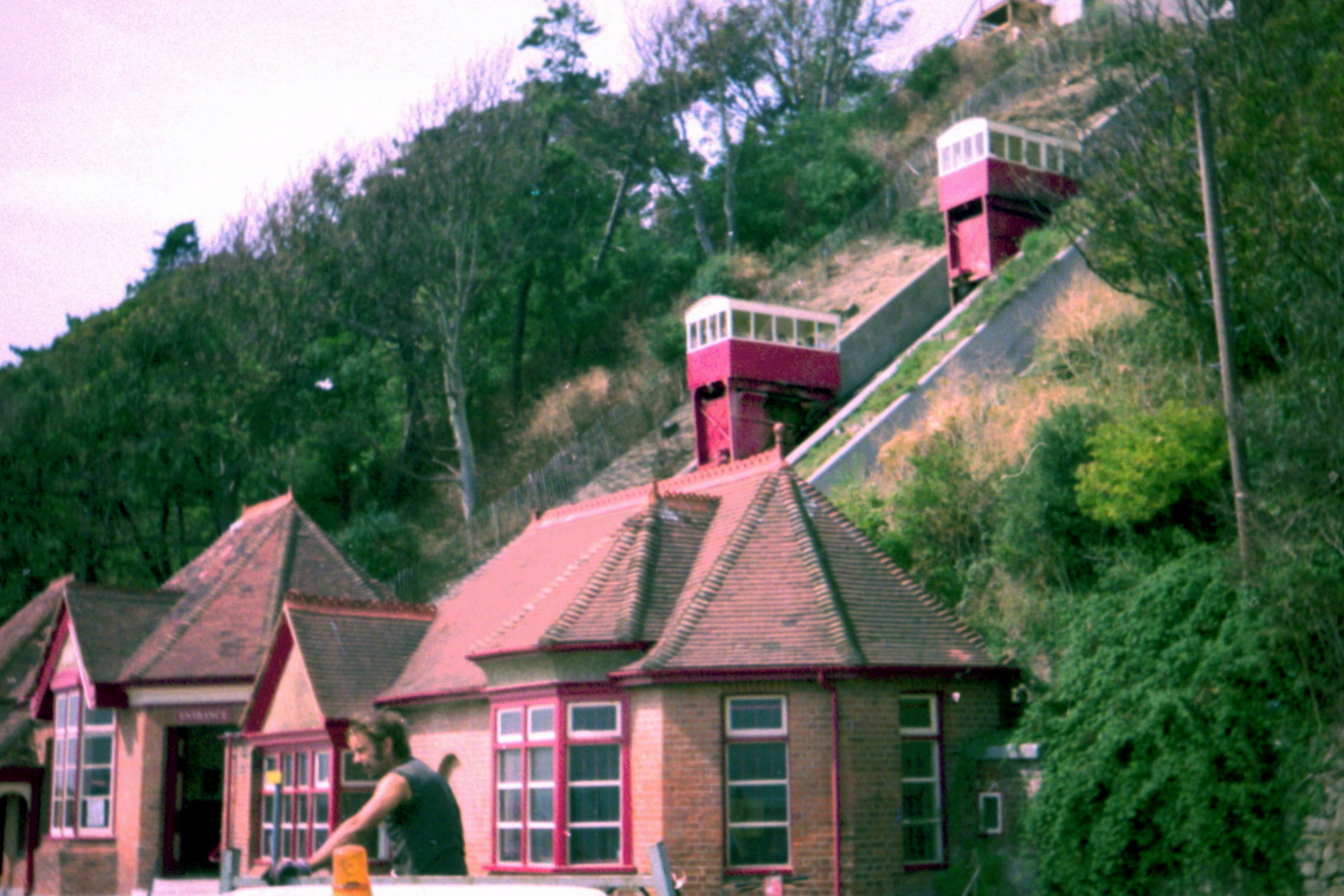
Folkestone Leas Lift, 1989 © Helmut Zozmann
Activity Planning
Folkestone Leas Lift, 1989 © Helmut Zozmann
The Leas Lift, a Grade II* cliff funicular railway in Folkestone, opened in 1885. One of only four remaining water-balanced lifts in the UK, it carried over 36 million passengers before closing in 2017 on health and safety grounds. Since 2020, Alix Slater Consultancy & Training has worked with The Folkestone Leas Lift Company CIO to secure funding, develop a viable business plan, and develop a community engagement programme, ensuring the lift's heritage and future sustainability.
Initially the consultancy helped secure a grant from the Architectural Heritage Fund, and went on to write both the Development Phase and Delivery Phase applications to The National Lottery Heritage Fund. The Development Phase included extensive public consultation, engaging over 2,500 residents and additional professionals from 25 organisations, as well as delivering a project in partnership with Strange Cargo which culminated in a public exhibition, and the online ‘Memories Project,’ reaching over 34,000 people. The consultancy also wrote the business plan.
During the Delivery Phase, the consultancy has continued to support the CEO and project team, focusing on evaluation and public engagement. Year 1 saw the launch of several engagement projects, including school packs, educational talks in schools, public heritage walks, and a partnership with Canterbury Christ Church University, where engineering students constructed a model of the lift. A touring puppet show brought the history of the Leas Lift to school children, older people and families in 2024.
The project is now in Year 3 of delivery and has passed its lifetime participation target, reaching around 25,100 people against a target of 18,113. Fifty-one free heritage walks have been delivered, including the project's first walk interpreted in British Sign Language, and recorded volunteering stands at roughly 5,873 hours against a target of 2,251. A year-long University of Kent events and marketing placement and a virtual environment internship have both run: the intern, a seventeen-year-old student at EKC Folkestone, built an interactive model of the lower station in Unreal Engine, animating the water-balance mechanism from scratch, and logged 170 hours against a required twenty. The model doubles as an archival record of the station before restoration.
The Heritage Fund's grant was increased in March 2026, rising from £4,805,435 to £7,047,729 as the project budget grew from £6.7 million to £9.3 million.
Capital works are scheduled to complete in 2026, with the Lift expected to open in early 2027. The consultancy continues to evaluate the project, reporting annually to the trustees and The National Lottery Heritage Fund, and will undertake visitor research once the Lift reopens to measure outcomes against the baseline established in 2020.
Get in touch